My Farm Can Grow Anything
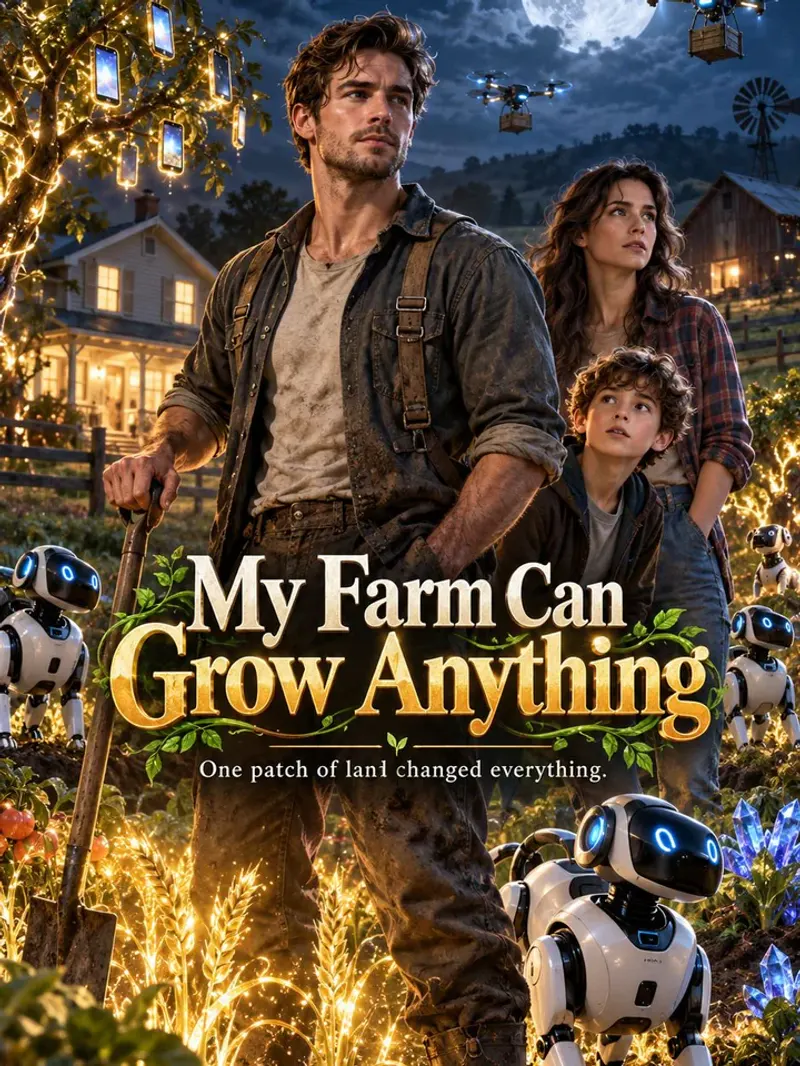
A harvest before the neighbors can blink
Randy Taylor’s farm has a problem that more hard work alone cannot fix. Someone has set the land on fire, leaving a small American farmer with little room for a setback and even less ability to begin elsewhere. My Farm Can Grow Anything answers the fire with a gift from Demeter. Crops can grow in moments. What keeps that idea interesting after the first impossible harvest is Randy’s reluctance to put the full extent of his recovery on display in a community that already knows how little he once had.
The fire gives this rural fantasy a concrete starting point. Randy is surrounded by farmers with more resources, but his small plot allows him to make a living and gives him a reason to stay rooted in the area. Losing a crop is especially costly when a person has little acreage to spare. Keeping the miracle on the damaged ground means the story has a visible measure of recovery. The same place that showed what could be taken from him begins to show how much he might be able to keep.
The gift comes with decisions nobody can make for him
Demeter’s intervention connects a goddess associated with cultivation to a particular man, his old shovel, and the ground he knows. Their roles are distinct. She changes what the land can do, and Randy has to decide what that new capacity is worth under ordinary local conditions. The neighbors provide the pressure by judging his circumstances against their own. They have every reason to expect a farm this small to produce modest returns. Randy can use that assumption as cover only for as long as his choices leave it intact.
The practical dilemma gives the middle of the story its direction. Growing as much as possible might put the danger of losing the farm behind him faster. A sudden abundance would give interested neighbors a reason to look harder at his land and how he works it. Caution preserves an advantage that is difficult to explain and leaves him carrying some of the uncertainty he could otherwise escape. For someone who has just seen how quickly his livelihood can be damaged, the choice between a quick recovery and a quieter one has weight.
Randy’s restraint is more revealing than his possession of the miraculous shovel. He has an opportunity to make the people who underestimated him revise their opinion immediately. Choosing what to show them suggests that the farm matters more to him than a public apology would. His caution also gives the viewer a way to read his character. At what point does careful stewardship become a refusal to take a reasonable risk? The question fits a farmer whose ordinary work would have involved tolerating uncertainty long before the blessing appeared.
The story’s terrain
- Primary genre Rural fantasy
- Themes Magical agriculture, economic rivalry, land ownership, hidden power, underdog recovery
From a burned field to a secret worth keeping
The fire and the blessing make a strong pair of early turns. The first threatens a whole growing season in one act. The second gives the production cycle an entirely different speed. That is an effective match for short episodes. A field can show a visible loss and an equally visible return without a long explanation of agricultural finance. Randy’s decision to use the gift carefully is a third turn because it changes what the viewer is waiting to see. Once the field can produce, the suspense moves to the question of how openly he can benefit.
That shift requires some time spent on ordinary dealings. Without them, growing another crop would always look like an obvious way forward. A pause to consider what somebody else might infer from Randy’s changed circumstances helps the miracle remain consequential. It also lets the show slow down without seeming to leave the main story. Every gain matters partly because it changes what can be seen by people who once had no reason to take the plot seriously.
There is a limit to the suspense a magical harvest can support. A power that supplies crops whenever the writer needs them risks making economic setbacks seem temporary. The best pressure therefore comes from consequences that a second harvest cannot erase, such as unwanted attention or a question about who really has control of the land. The drama has firmer ground when it asks Randy to weigh those consequences than when it leans on the visual novelty of plants growing faster than anybody expects.
Agricultural miracles and secret advantages are both well-established fantasy ideas. Combining them with a farmer’s particular relationship to a modest plot gives the usual rise to prosperity a local scale. An office or a palace could show that the hero had become rich. Here, the damaged ground can remain the center of attention even as his prospects improve. The change gives Randy a reason to stay with what he had already built.
Give the series a try if you like watching someone recover control of a livelihood one decision at a time. It offers progress you can see alongside a reminder that a farmer’s relationship to the land includes the people on the other side of its boundaries. Viewers looking for a detailed account of managing a working farm will find the pace and the miracle pull toward fantasy. Its strongest reason to watch is the moment when abundance creates a new problem for the man who seemed to have too little of everything.