The Scrap King Is Most Interesting After Ryan Makes His First Find
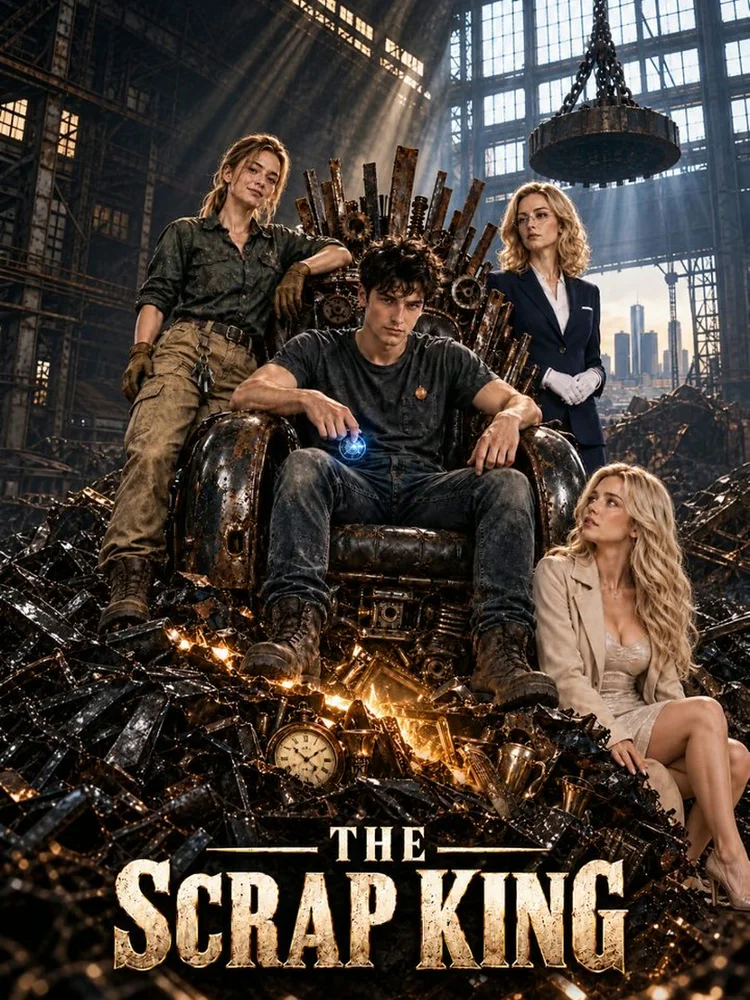
Somebody has to persuade a buyer. That can be easy to forget when a supernatural system has just told Ryan Carter there is value in something that looks like rubbish. Ryan is the person who can see it. The people he wants to work with still live in a world of shop floors, buyers, and things that cost money to move. A story about discovering hidden riches gains an extra measure of interest when it takes that second world seriously. It gives Ryan a chance to become good at a business after the first stroke of luck that makes a business possible.
What his father left him
Ryan loses his job and his relationship. The copper badge he inherits from his late father remains at a time when those other parts of his life have gone. Its effect is extraordinary. It activates a system that allows him to recognize hidden value in discarded objects. It is worth noticing how little there is to the object itself. Copper is neither a guarantee of money nor an obvious sign that a person’s life is going to take a different course. The badge could hold a place in Ryan’s possessions for the ordinary reason that his father owned it. The series is more affecting for giving him a reason to keep it that would make sense without any magic.
The test involving a discarded soda can does a lot with very little. It is a kind of object people choose to be finished with every day. Ryan’s response marks a shift from simply needing a lucky break to being able to investigate something someone else has already dismissed. If he were led straight to a chest of jewels, he could have a new bank balance without any corresponding change in how he pays attention. Starting with a can makes the ability feel more like a specific change in his understanding of the place around him.
Genre and themes
Primary genre — Contemporary fantasy
Themes — Detroit, inheritance, salvage and recycling, sudden wealth, corporate conflict
Four people can make something one man cannot
Sophie and Marcus are his partners as the Detroit operation grows, and Vivian has the auctioneer’s task of making a case for value to other people. The arrangement gives Ryan a reason to share his good fortune before a conflict gives someone a reason to take it. Vivian is particularly well placed to show what the badge cannot accomplish for him. What an object is worth to an individual can be quite different from what someone will pay for it across a room. By bringing an auctioneer into the orbit of a man with a supernatural form of appraisal, the series has given itself two ways to understand the same thing. Conflict between those ways of looking can be as valuable to the story as agreement.
Ryan could walk away from a bad deal while the consequences still belonged mainly to him. The growth of the operation changes the cost of walking away. New York executive Richard Ashford now has an interest in a venture that is worth getting in the way of, and stolen treasures bring wider interests into view. The threat works best when Ryan has to decide whether to expose a powerful opponent at a risk to the firm, or protect its immediate position at the cost of leaving the wrongdoing alone. He can go on identifying valuable objects in either case. There is no discovery the badge can make on his behalf that will tell him which choice his partners ought to live with.
I would have liked to know how Vivian would talk about the first can if Ryan put it in front of her. The badge can answer a question about an object. The auctioneer has to decide which part of that answer a room full of people might care about.
The story changes tempo in a way that follows what Ryan needs. The two losses and the badge can propel the opening. A company takes longer to become real to someone watching it. The intervening business scenes are worth the time if they establish what Sophie and Marcus have to do besides being friends to a newly fortunate man. Once Ashford arrives, the scale rises quickly enough that I would worry about the story forgetting the people who made the operation viable. A clash with an executive is easy to stage and easy to recognize as a victory when it ends. Knowing who helped Ryan build a livelihood is what makes keeping it feel like an achievement.
A system that announces unexpected riches is familiar in short fantasy serials. There is some flair in attaching that power to Detroit recycling, inherited copper, and the baffling variety of things other people decide to throw out. The corporate material is more conventional. I would happily watch it if it left enough space to remember what a person like Vivian knows that Ryan still has to learn. Anyone who mainly wants the speed of a surprise fortune may find the business stretch comparatively quiet. That is the stretch I would recommend. Discoveries are plentiful in this kind of fiction. A good reason for somebody else to join the discoverer at work is much harder to come by.